The stain nobody mentioned
It is one of the most common chimney findings in a Laguna Hills escrow: a brown tide mark on the ceiling by the fireplace, a stained rafter in the attic photos, or a damp smell the buyer noticed at the walkthrough. The seller may have painted over it years ago and forgotten. The buyer now wants to know whether it is an old, fixed leak or a live one, and what it will cost.
A chimney leak is a good item to settle before close. It is usually a defined job with a price, and leaving it open means the buyer inherits it in the first wet winter. The trick is getting from a stain to a signed scope without the leak turning into a guessing game between agents.
Where water gets in around a chimney
Water near a chimney rarely has just one route, so the first job is finding which ones are active. In order of how often we see them here:
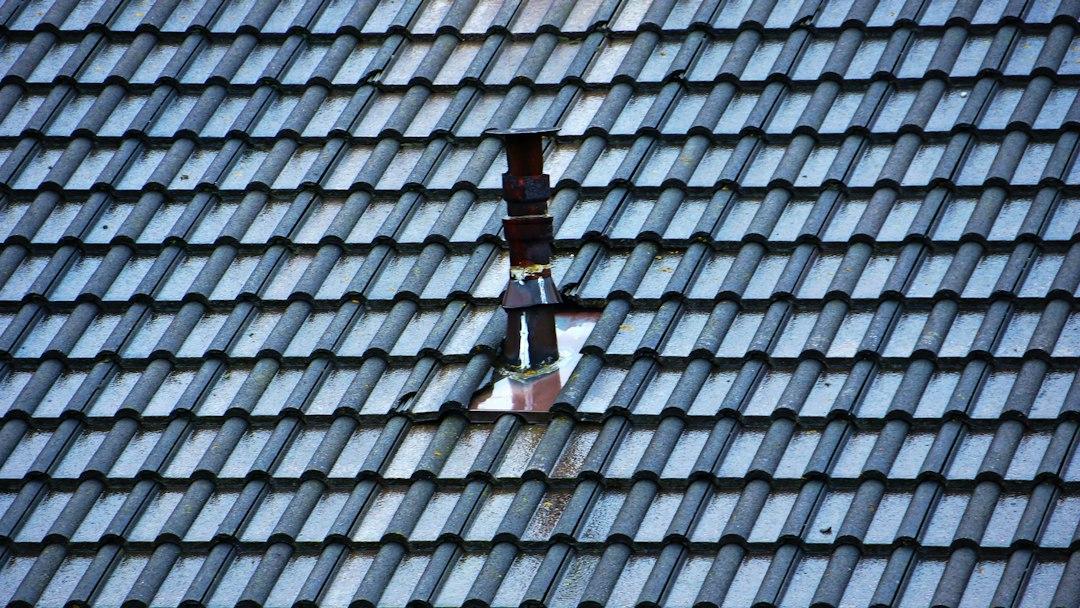
- The roof joint. The metal that seals the gap between the stack and the roof wears out, comes loose from the brick, or was disturbed when the roof was redone and never set back properly.
- The uphill face of a wide stack. Rain and leaves pile up behind it with nowhere to go, and the water finds the weakest seam.
- The top. A cracked crown lets water into the brick; an open flue takes rain straight down to the damper and the smoke chamber.
- The brick and mortar. Soft, worn joints soak up water in a long storm and release it on the inside.
- On factory-built fireplaces, a rusted metal top on the framed box, which drains onto the pipe and the framing.
Closer to the coast, in Laguna Beach and parts of Costa Mesa, salt air speeds up rust on every one of those metal parts.
How we trace it during escrow
We start inside: where the stain is, how big, whether it is wet now, and whether there is newer paint over it. Then the attic, to see which side of the chimney the water runs down. Then the roof. If the source is not obvious we water-test one section of the chimney and roof at a time, with someone inside watching the stain, so the scope names a source and not a suspicion.
If the house has no Level 2 report yet, the leak visit and the camera run are often booked together, because water in the attic sometimes means water in the flue.
Our leak prices, and what sets them
These are the figures we publish for water work around a chimney:
- Finding where water enters at the stack and stopping it: $575 to $3,450
- A peaked diverter on the uphill side of a wide stack: $460 to $1,035
- That diverter with all the roof-joint metal renewed at the same time: $690 to $1,700
- A stainless lid and mesh for an open flue: quoted after we measure the flue
Where a job lands inside its range depends on the roof material (tile has to be lifted and reset, shingle does not), how many routes are active, the height of the stack and how much worn mortar has to come out before new metal can be set. A cracked crown or a rusted chase top has no list price and gets its own priced line on the scope.
To get a figure for your file, request a leak visit here and tell us where the stain is, whether it is fresh, and who should receive the scope. We call back to set the visit.
One scope, two signatures
The scope we write for a leak in escrow has the same shape every time: the source we found, where it is, the fix, the price, and whether the fix needs a second visit. The person paying signs it. If the agents want the other side to acknowledge it, there is a line for that too.
That single document does a lot of work. The buyer's agent can attach it to the repair request. The seller's agent can see the figure before agreeing. Escrow has a dated record of what was promised. And if the buyer would rather handle the work after close, the same figure becomes the credit.
Repair or credit
Both are reasonable, and the scope supports either. A few things tip the balance:
- Repair before close suits a leak that is active, simple and on a roof we can reach easily. The buyer moves in to a dry chimney, and the completion note goes in the file.
- Credit suits a leak tangled with other work the buyer plans anyway, such as a reroof or a gas conversion, where doing the chimney twice would waste money.
Either way, the interior damage (drywall, paint, sometimes framing) is a separate trade. Our scope covers the chimney and its roof joint and notes the interior damage so the buyer knows to price it.
After the repair
When the work is finished, we photograph each repaired area and, where the season allows, water-test it again. The completion note lists what was done, with photos, and goes to everyone on the original scope list. If any line could not be completed before close, the note says so plainly so the agents can convert it to a credit.
The service itself is on our chimney leak repair page, and the roof-joint side is on chimney flashing repair. For the full table of fixes and prices see up to code repairs, and for crown and liner findings see crown and liner findings in escrow. We work across Laguna Hills and Lake Forest.
A stain in the report and escrow still open? Reach us through the contact page and we will trace it and put the fix on paper for both sides.
Have a Report Line Like This One?
Aylward Chimney Pros works out of Laguna Hills for buyers, sellers and agents across Orange County. We inspect, write each finding for the people in the deal and price the repairs line by line.